Explore this blog by clicking on the labels listed along the right-hand sidebar. There are lots of interesting stuff which you won't find on the home page. Also listen to my stories on YouTube. Just type in Suvro Sir or Goppoguchchho.
Seriously curious about me? Click on ' What sort of person am I?'

Wednesday, September 01, 2010

What's going on?

National Geographic has shown millions of hectares of barren land in Brazil where there was near-impenetrable rain forest even two decades ago. The Himalayan glaciers are shrinking at a breathtaking pace. The passages between continents in the Arctic Ocean have remained open in winter of late, which used to be unheard of. Climate rules have gone haywire all over the world, with Russia reeling under a sweltering summer, arid areas in Ladakh and Pakistan being flooded while people in Cherrapunjee, Assam – the wettest place in the world when I was a boy – are queuing up for water. It is well known that our capital city itself has grown used to living with power and water scarcity round the year. In my own little town, the muggy summer seems to be going on for ever, there has been too little rain all over south Bengal, and there are real fears being articulated in the papers that there might be severe water shortages round the corner.

And yet what is amazing is that people are so utterly apathetic, or maybe I should say unconcerned, about what is going on. They talk about growth rates, and the share market, and the examinations ahead, and the coming pujo-extravaganza, as though everything is just business as usual. It scares me. Are people going to wake up only when scenarios like Mad Max and Water World and The Day After Tomorrow materialize? What shall we do with our fine clothes and fancy cars and slick mobiles when the taps run dry? I remember how sudden flooding cut off the power in Hyderabad briefly a few years ago, and then people suddenly realized you cannot have an IT industry without electricity – but they forgot the lesson with such incredible speed! In the same way, it seems to me, the world outside New Orleans has forgotten what Hurricane Katrina did (strange that we remember 9/11 so much more vividly, although the damage was on a vastly smaller scale!) Is that what we have decided upon as the best strategy to deal with disasters, then: quickly forget every trauma so that we can go on pretending that we are making wonderful progress? Do we really believe that we can beat Nemesis perpetually that way?

I wonder whether anybody here reads the frequent new entries on the blog titled Worldchanging: bright green that I have on my blogroll...


Saturday, August 28, 2010

Comments

Something happened today that has made me change my mind about waiting long for comments on this blog each time after I write a new post.

I had activated a facility that gmail provides to mark anonymous comments (besides those from all sorts of weird pseudonyms I have come across over the years) as trash and send them directly to the trash can without showing them in my inbox first (unless the emails are from sensible names, I trash them from the inbox without opening them, too: a good way to protect my computer from viruses, I have been told, apart from other things!). The trash is automatically cleared every thirty days, but upon a whim I occasionally take a peek into it – and today I was amazed to find numerous comments there! It goes without saying that I clicked on ‘empty trash forever’ without glancing at any of them. And now I have decided that if more people want to write comments from hiding than otherwise, there’s no point waiting for comments to come in: I shall write as often as I please, and those who are interested will take the trouble to look up older posts (and read up and reflect upon earlier comments) and comment on them – as a few genuine readers actually do, whether they agree with everything I say or not.

This is a kind of sickness, this writing comments anonymously or from behind ridiculous assumed names, and on this I won’t hear different opinions. I have been writing letters and other things virtually all my life, and using the net for about fourteen years now, and I have said a lot of things to a lot of people, including a lot of harsh things, but I have never once felt the need to write anonymously. I will not deviate from the opinion that only someone dirty minded or weak-minded needs that kind of shield – and my reaction is that the opinions of such craven people do not count, so they do not deserve attention or acknowledgment, leave alone rejoinders. Even if they write words of praise: I have (until that filter was installed) deleted anonymous comments again and again which lauded something I had written fulsomely. At the same time, as any real reader will have noticed – and people who can truly read are few indeed, as I should know from thirty years’ experience of giving people comprehension exercises! – I accommodate critical comments too, just so long as the writers are polite, and sufficiently informed, and give evidence of having read my piece closely. Indeed, I often engage with such critics, trying to point out how far I agree with them, or stand corrected, or where I think they have not understood me, or have made some logical or factual error. That is what I call debating, and as I have lamented before, far too few either understand debates or can hold their own in the right spirit.

Judging by the difference between the small number of people who have enlisted as followers and the much larger number who keep visiting this blog, it is evident that a lot of people visit and maybe even read a bit, but cannot think of anything to say, no matter what I write about. I suppose I should accept that as okay, though a bit of a pity. And I suspect that it is a small fraction of that number who want to say things which deep inside they know are either foolish or ignorant or just plain irrelevant if not downright offensive, and these are the people who want to write anonymous comments. Chances are very high that these people will never dream of visiting me and saying the things they write as comments to my face: the security of anonymity that the net provides makes lions out of rats. Well, bad luck, folks. I have already told you how your efforts are wasted.

Thursday, August 26, 2010

More musing on education...

John Kenneth Galbraith coined the expression ‘conventional wisdom’ – the kind of stuff that everybody takes to be axiomatically true. He also pointed out, with a great wealth of historical examples, how conventional wisdom keeps changing from one era to another. Thus, for instance, ‘everybody’ knew once upon a time that dragons existed, and the earth was flat, and monarchy was enjoined by divine right, and woman’s proper place was in the home, and so on and so forth. He also discussed how people of every age scoffed at the conventional wisdom of their ancestors while passionately and uncritically clinging to their own.

One such piece of conventional wisdom that is currently accepted as gospel truth is that every kid must be sent to school and college, and kept there for twenty years at least. It is said that the young ought to be given a chance to ‘enjoy life’, and also all the ‘benefits’ that formal education can provide. Now pursuant to what I wrote in the last post titled What price education?, I would like to rock the boat violently, and suggest that 99 per cent of the population neither needs nor wants schooling beyond class 8, which means up to the age of fourteen. Given that neither they nor their parents want anything more from education besides jobs, and given that most jobs definitely do not need any education beyond class 8 and a few weeks or months of training (think of everyone from a shop attendant to a bank teller to a hotel receptionist to a petrol pump manager to an office clerk or an insurance agent or a factory worker), who needs to hang on to high school and college and ‘learn’ all sorts of stuff from the calculus to Shakespeare to the way our digestive system works or how imperfectly-competitive markets operate, stuff that they are not remotely interested in, stuff that they will forget within months of their examinations, and which they will NEVER need in their working lives? As for other professions requiring a little more education, such as those of mechanics and nurses and primary school teachers, it’s very little mind work and mostly repetitive, hands-on training, nothing that cannot be started off after class 8 really – why waste four more years and then go to college to learn such basically elementary stuff?

Consider honestly – how many people do you know who are genuinely interested in medicine, or the law, or history, or literature, or mathematics of a high order, things that really need many years of study beyond high school? Why send everybody to college when they could be making a living by the time they are 18 or 20? Look around you: it is an open secret that the overwhelming majority in our colleges are actually what economists call ‘disguised unemployed’, doing nothing but having fun at their parents’ expense, sleeping, partying, chatting on Facebook, idling at cinemas and shopping malls, putting people’s lives at risk zooming about on snazzy bikes, having silly affairs, experimenting with drugs, getting unwittingly pregnant, waiting to get married off, or for ‘campus recruitment’ into the kind of jobs which, as I said before, don’t really need any education beyond class 8, and involve pretty menial work and pay peanuts anyway. All they get from their long ‘education’ is ingrained laziness, irresponsibility and swollen egos, which actually makes it tough for them to adjust to the rigours of the working life. Think: if they had been working since mid-teenage, in however humble a capacity, they would have been contributing something to the family fund as much as to the gross national product; instead, they are allowed to live as high-expense parasites till their mid-twenties: who gains from that?

The very worst thing about these millions of pampered brats is that they have been conditioned to look down upon people who are actually much more valuable than they. Thus the ‘smart’ schoolgirl sneers at the ‘mere housewife’, and so does not want to get married early, though she might be dreaming of becoming nothing more than a waitress in a hotel or a call-centre employee, blithely oblivious of the fact that being a good housewife (not the rich couch potato type who leaves everything to in-laws and maidservants) calls for much more hard work and worldly wisdom than their aspired jobs do, and is nothing if not a respectable occupation. Likewise the ‘smart’ male bank teller talks to the fishmonger as though the latter is an infinitely inferior being, though his own education and job is nothing that any truly civilized man can be proud of (and he might be stupidly ignorant of the fact that the unpretentious fishmonger actually earns much more than he does!). As for the so-called all-important chance to ‘enjoy life’ while young, who says that being idle and fooling around all the time at one’s parents’ expense is the only way one can enjoy life, or even the best way? Millions of people down the ages – from super successful ones like Dickens and Sachin and Bill Gates to much less famous ones without number – have dropped out of school or college and started working early: who dares to claim that they never enjoyed their lives? In any case, doesn’t the idea of ‘enjoying life’ sit very uncomfortably with the idea of getting educated, which, unless grossly caricatured as it is being these days, has always meant hard slogging round the year?

Let me stop at this point and wait. I am hoping this time round many more people will come in with comments, and thus join in a debate…

Friday, August 20, 2010

Notice

I have regretfully removed several blogs from my list titled ‘Blogs I visit’, for no other reason but the fact that these blog writers (despite repeated prodding and nudging from me) have not been writing for many months together. Maybe they have given it up as a bad job. Writing needs patience, time, skill, and most importantly, having things to say again and again: I suppose many people start off for a lark, and very soon they run out of steam, or become busy with ‘more important’ things like having affairs, going on shopping or drinking binges, or job hunting… in any case, I don’t see any point keeping these dead or dormant blogs on my list of favourites any more. Suvro Sarkar, Sreejith, Rochishnu, Supra, Debaroon – let me know if and when you start writing frequently again (by which I mean at least once a month: I myself write as often as ten times); then I shall put your blog back in that list once more. Arani I am still keeping for a while there, because, though he posts only once in a blue moon, he invariably makes uncommonly good reading. The same goes for Tanmoy and Alka. I know they have their problems, and are often hard-pressed for time, but I shall keep wishing to see them writing.

In that same blogroll I have included a few other sites that I often visit. I urge my visitors to try some of those sites now and then: that will not only give them a better idea about my interests, but some food for thought too (besides material for writing better essays and for school/college projects – this is for those of you who are still students!)

These two blogs are now my most preferred way of keeping in touch with the world. I get dozens of phone calls and emails every month from people simply asking ‘How are you doing?/ What are you doing these days?’ Now I cannot talk shop or gossip, or write back the same things over and over again, and most of my serious concerns are reflected in these blogs anyway, so the best thing these people can do, if they really want to keep in touch (which I strongly doubt sometimes!), is to read and comment on my blogs. My orkut community is nearly defunct, and Facebook is for duds (indeed, it’s most used by kids my daughter's age), so in order to communicate with people I prefer to use these blogs, besides email. 

I am already looking forward to this blog’s fifth birthday next year, by which time I should have more than 200 followers, and maybe the visit-count approaching the 100,000 mark. Do my readers have some ideas about how best to celebrate the occasion?

Wednesday, August 11, 2010

What price education?

As everybody who knows me even at some distance should be aware, I have been obsessed with reading and arguing and thinking and knowing things all my life. I also happened to do more than well in all formal examinations as long as I sat them, and besides, I have been involved, as a teacher, with education for thirty years now, handling pupils from middle school to the postgraduate level, cutting across a wide range of disciplines. So I guess when I say that I am getting sick of what passes for education these days, and wouldn’t mind much if my daughter gave up formal education after high school and concentrated on doing something she likes much better, people should sit up and take notice.

Let me be categorical in outlining what I have understood about the meaning(s) of education.

1.      At the highest, most rarefied (and also the most essential?) level, education is about man-making, in the sense that everyone from Socrates to Vivekananda understood it. It’s the meaning that comes in most useful at the time of giving seminar lectures and writing learned articles, and in practice it has become the least appreciated, most abused meaning of all – as I am sure not only teachers but parents and even little schoolboys will agree with me. If someone grows up into a strong, brave, honest, kind and loving soul these days, it is despite, and certainly not due to the kind of schooling one has received.
2.      Second in importance is a process of nurturing what used to be called ‘well-stocked minds’ – not necessarily good and precious human beings, but at least widely informed, intelligent, balanced and not narrowly-prejudiced men and women, and therefore folks who are assets to any society and nation, as humble parents and office-workers as much as high-level leaders and governors, trained to live the good life both public and private, because they know how much true enjoyment the world offers, and also how to avoid its worst snares and pitfalls. Let my best students, who have acquired postgraduate and higher qualifications from the best of academia in India and abroad, tell me how much they have been benefited in this sense by twenty-odd years of schooling.
3.      At the third level, education is a process that supposedly encourages and brings the best out of those born with exceptional cerebral talents, those destined to become great scientists, inventors, artists, writers, teachers and statesmen. Forget the vast numbers of third-rate colleges that India and America have sprouted of late – do even the very ‘best’ contribute much in that line any more (keeping in mind that many of the most successful people in the US today are dropouts from places like MIT and Harvard)?
4.      At the lowest – not unimportant, and perhaps the only sense relevant to the overwhelming majority of people, but lowest nevertheless – level, education is supposed to equip young people with some saleable skills out of which they can make a living. Now barring a small number of professions (such as surgeons and lawyers, CAs and pilots, and even hairdressers and fashion designers and carpenters who are lucky), our ‘educational institutions’ of this sort, it is an open secret, equip their ‘students’ so poorly that, after, say, a BTech/BHM/BBA degree bought for five or ten lakhs or even more from an upstart private college, they consider themselves both lucky and ‘proud’ to get 20-25,000 rupees-a month jobs in this or that corporate house, whether they are back-end IT firms or banks or hotel chains or shopping malls and suchlike. These are 12-hours a day grinds, too, sometimes, and despite all the vaunting, the work is often of a very menial sort, and demeaning, and full of drudgery, and offering few prospects of better things in the long run: rather, there is always the threat of the pink slip hanging like the sword of Damocles over their heads, and these people get broken families and ulcers and burnouts long before they reach middle age. Also, they are by and large uncultured with a capital U (whether you judge by their public manners, the general burden of their conversation, or the books they have read, their taste in clothes and jewellery or their attitude to charity), as I have been chagrined to find out a thousand times over… my question is, is the pursuit of this kind of mind-destroying, soul-deadening ‘education’ worth it? Given that if someone is intelligent, and well-informed, and energetic, and willing to work long and hard, and is only interested in money, and she starts her own fledgling business with a bit of daddy’s money at age 20, chances are reasonably good that she will be doing much better than 95% of her contemporaries in 15-20 years’ time, as I have verified from a thousand live examples around me, even if she only runs a good garments shop or eatery? Besides, financially speaking, it is always better to own an iron foundry or hospital than to be employed as an engineer  or doctor there, and one thing I have learned very well is that you certainly don’t need to be an engineer or doctor to be able to set up businesses like that, whatever other qualifications you need.

So I tell my daughter ‘If you are seriously interested in getting a good education, go the furthest mile along the line of your choice, whether you want to study Physics or Sanskrit at the university level, but if you only want to make money, and big money at that, don’t waste your time pretending otherwise. You don't need formal education beyond high school to make a good career in purely material terms’. Who is going to tell me that I am misguiding her?

P.S., August 18: It is now a week since I put up this blogpost, and it has been visited almost 500 times, from literally all around the world. But just listen to the deafening silence! Nobody seems to have anything at all to say, in criticism, support, or to point out dimensions of the issue that I have missed, or even to ask questions. Yet virtually every visitor is not only an educated person, but has been reared in a family where education was supposedly given the very highest priority. Doesn't this single fact speak volumes in support of the point I was trying to make: that education these days does nothing to make mentally alert and active human beings?

Wednesday, August 04, 2010

Skepticism and cynicism

It is good to be skeptical; it is bad to be a cynic. Especially while one is still young.

When we are surrounded by stupidity, ignorance, sham and superstition, it is good to take all things with a pinch of salt, and not to believe anybody blindly, whether it be parents or teachers, god-men or political leaders. Using one’s reason, and finding out the facts for oneself is good: always look things up in the dictionary and atlas and encyclopedia, always listen to the voice inside that warns ‘This fellow is talking through his hat’. That is what is meant by skepticism. It lies at the heart of all true science, and any attempt at safe and sane living. As a great philosopher said, ‘If we had all listened to our parents, we should still be swinging from the trees’. And if we believed everything our teachers said (especially given the kind of teachers all around us in this country!) we’d all grow up utterly confused and dulled – which is far worse than being merely ignorant.

But to be cynical is to be unable to believe there can be anything good, anything beautiful and noble and heartening at all in human beings. It is to react knee-jerk fashion to all such suggestions with a singular fixed idea in mind: there must be some base, ulterior motive behind what someone is doing or saying. And it often goes like this: since I am incapable of a good deed or a beautiful feeling or a noble thought, anybody who claims such things must be a fraud. There is nothing called true love, no honesty in business or examinations, nothing like idealism in politics, no use for knowledge beyond making a living, nothing beyond feeding and procreation and preening in life … that’s the sort of thing I mean.

The ghastly thing about cynicism is that you make life more difficult than it need be for both yourself and others (cynics are bound to be gloomy people full of despair, and crooked to boot, even if they put on a veneer of good cheer and niceness) and that it is self-fulfilling: in a world full of cynics even the good are condemned to live unhappily, and also turn crooked by and by, unless they are driven to madness and suicide, because cynicism, in order to justify itself, cannot allow truth and goodness and beauty to live happily.

Now it is ancient wisdom that the old are cynical, and it is both the power and the duty of the young to break old moulds and rejuvenate the world with new hope, joy, love, dreams and ideals. So what I find terrifying is that all around me there are young people who are already vastly more cynical about just about everything, even their own love lives and careers, and the need and potential of philosophy for change. Just beneath the perpetual (and juvenile -) surface exultation about how fast the world is ‘progressing’ (as measured by how many ‘apps’ the latest mobile can handle), there runs a current of deep distrust, frustration, apathy, aimlessness and despair. I can sense it even among folks in their late teens, and it is already set hard by the time they are ten years older (children still, for God’s sake!) And the wonderful thing is that all these people are middle- or upper middle class, and have been brought up in sheltered cocoons by doting and extravagant parents: beyond the occasional death by accident in the family and failure in exams and office politics and quarrels with friends and lovers, these people have hardly seen any suffering at all. Whereas, I reflect, lots and lots of people have come through infinitely worse trials and tribulations and emerged triumphant, whether I think of Dickens or Charlie Chaplin or Michael Faraday or Vidyasagar or Douglas Bader or Helen Keller or more characters in great fiction than you can handle at one sitting. Or, even if they have failed and gone under, they have been ‘destroyed but not defeated’, whether you think of Gandhi or Santiago in The Old Man and the Sea, of Anne Frank or Paul Baumer in All Quiet on the Western Front: so they remain glorious memories in the mind as tragic and heroic figures, capable of inspiring us to great things, not objects of ridicule and pathos. Tagore was not a cynic, nor was Louis Pasteur, nor Nurse Cavell, nor Abraham Lincoln – and these people faced trouble, danger, insult, hardship, fear, confusion and failure on a scale that most of today’s young can hardly even conceive, leave alone dare to handle!

Another awful thought: the completely brainwashed young terrorist, armed to the teeth and going on his midnight hunt for victims, whatever else you can accuse him of being, cannot be called a cynic. He believes absolutely in the supreme importance and rightness of his cause, so even if he blows himself up along with many others, there dies a happy person. The poet wrote The best lack all conviction/ the worst are full of passionate intensity. Poets can always see further and say it better than anybody else…


Wednesday, July 28, 2010

Does death alone make us (momentarily) serious?

I read a bit of a haiku poem (in a James Bond thriller, of all places) that said ‘you only live twice/ once when you are born/ and once when you look death in the face’.

Having taught thousands of youngsters (and dealt with their parents) and watched them grow up over three decades, I smile wryly to myself to think how right the poet was. 

I don’t know what exactly he meant about the moment of being born (maybe I missed something there!) but if by truly living we mean being ‘wide awake’ to the world and to one’s own thoughts and feelings (Maslow’s concept of peak experiences), it is indeed true that most of us sleepwalk through life (look up this blogpost), waking up momentarily when we are just about to die, or when we watch someone close dying in front of our eyes. It has been well said that if all of us were told that the planet was going to be destroyed tomorrow, all the phone lines in the world would be jammed by people trying to call and tell long-neglected others how much they were loved (and confessing that they were guilty of all sorts of socially-enforced pretence earlier in not confessing their love). All talk of business deals and scientific breakthroughs and political manouevrings and attending parties and love affairs of the teenage sort would be instantly forgotten as utterly trivial. No wonder the great religious teachers (Schumacher aptly called them ‘great masters of living’) of all lands and ages have told us to live as if there would be no tomorrow.

It rankles particularly if you have been a teacher all your life. That too, someone who tries to ‘teach’ literature, and feels strongly about it (rather than merely doing it as a livelihood), and sees how thousands of people – including supposedly bright people – take  notes, practise answering set questions, get through examinations with good marks (which is all they have been told to care about), and forget everything – if they ever really understood anything at all – immediately afterwards; not letting anything they have been ‘taught’ to affect their behaviour, their outlook, their moral fibre, their lives in any significant way. I have not only had a pupil tell me 15 years after the event that he had at last understood the message of O. Henry’s The Gift of the Magi (which, at least, was a gratifying thing), but I have lost count of how many old boys and girls I have had to give a patient ear to when they got back to complain or lament about hard lessons learnt later in life in the family, workplace, neighbourhood, police station, hospital, morgue and crematorium. And when I have sometimes pointed out to them that these things which now appeared to be of the utmost importance, these were the very things that were discussed in the course of our literature classes long ago when they were not really paying attention (or bothering more about their clothes and bikes and girlfriends, or science courses and college admissions and things like that), I have seen mostly blank stares, or worse still, the pathetic refrain ‘But now it’s happening to me’ – as if that really makes the tragedy all-important and deserving of special attention. And if I don’t fall clucking all over them, I come across as extraordinarily obtuse and hard-hearted…

I have talked myself hoarse trying to explain some of the great Shakespearean tragedies, and Shaw’s plays like Saint Joan, and novels like The Old Man and the Sea and Lord of the Flies, short stories like The Happy Prince, The Last Leaf, How much land does a man require, The Boss came to dinner, The Devoted Son, and poems like A Psalm of Life, Where the mind is without fear, The Brook, Lines written in early spring, The Man with the hoe… to cite just a tiny fraction of all the literary works I have had to deal with. Few people, I know, have learnt anything at all. More and more I realize you cannot teach anybody what s/he doesn’t want to learn. And especially so in this age, when no learning is valued for its own sake or even for its likely long-term benefits (such as knowing how to live well … to do which you need to learn honesty, and toughness, and courage, and self-control and acceptance, and empathy for others' suffering and laughter in the face of despair and things like that, infinitely more than you need any physics or math or biology). You hear someone cribbing about office politics and you remind her of something she had read in class with me, and pat comes the defence, ‘Oh, that was only a story; this is for real, this is happening to me!’ You try consoling someone who has been jilted in love by similarly reminding him of a warning that was part of a poem in his school syllabus, and you get the same reply. You try telling someone how he was taught long ago that one must learn to handle the fact that luck often plays truant and fouls up our best laid plans, and all you see is a displeased grimace, and you can read his mind – ‘Why shouldn’t I be different from all the rest of mankind?’ (and some people call me an egotist!)

Reminds me of the way the Buddha taught the woman who was distraught after losing her only child the supreme lesson of acceptance. I wish there were teachers like that around: we need them much more today. I have tried, but failed.

Friday, July 23, 2010

Sachin, too!

I read in the newspaper a few days ago that Sachin Tendulkar’s autobiography is about to be released. Only ten copies will be sold to start with, at a price of $75,000 each (that’s a little shy of forty lakh rupees).

Wait, there’s more: the USP of the book will be, not ho-hum stuff like ‘hitherto unpublished photographs’ of S and his family, but an actual drop of his blood, mixed into the paper of the signature page in the form of a resin.

The publishers, M/s Kraken Media based in London, have explained this ‘innovative’ effort as the best way they could think of to give the ‘personal touch’ to those of S’s followers who regard him as ‘god’ (and, it goes without saying, are both rich and damn-fool enough to part with that kind money for a book of this sort. Bill Gates paid a vastly bigger fortune for a book, yes, but that was the original handwritten diary of Leonardo da Vinci, for heaven’s sake!)

Think.

Even if, as claimed, the entire proceeds of the sale really go to charity, what kind of a world do we live in that this is how funds have got to be raised from stinking-rich oafs for good causes?

As for me, I was thinking of countless men and women who have lived wonderful lives and have written wonderful autobiographies, and would have died before they stooped to such utterly pathetic gimmicks in the hope of being seen a little more in the newspapers or making a little more money. Even after getting the kind of money and publicity that Sachin has got already...

Monday, July 19, 2010

Where would you live?

If you had the money to indulge your every whim, where in India would you like to build a house with the purpose of living in it most of the time?

I like to think of such things in my leisure time: it’s one way of making fantasies come true, at least in the mind.

As I have said before, I hate big cities: so I start by ruling them all out. Rural India, on the other hand, is (still, alas) far too backward to think of settling down permanently there, no matter which state you have in mind. Quick weekend getaways, maybe, living there, no.

So – for me, at least – it quickly boils down to some small town or the other. But there are thousands, and it’s hard to pick from them. There are problems with most towns I know, too: in one place there are daily power cuts that last forever, in another there is an acute water shortage in the summer months. Some are too cold, and some too hot. Some are plagued by militant insurgency: not my cup of tea. Some are getting too noisy and polluted for comfort: my Durgapur is definitely one of them, besides lacking in the most basic amenities that a man of taste looks for, such as parks and museums and libraries and art galleries and book shops and health clubs and green walks and a lot of nice places to go visiting within a few hours’ driving distance (as you could, for instance, if you lived in Shimla). And I should want neighbours who are either friendly or of the harmless, non-interfering sort.

Mussoorie, Chandigarh, Ranikhet, Udaipur, Shillong, Bhopal, Bhubaneshwar, Vishakhapatnam … or some place deep down south, which I haven’t explored?

Or have things come to such a pass that no town in India is anything to write home about any more? 

Tuesday, July 13, 2010

Viva Johnny Depp!

I used to say that whatever Tom Hanks did in a movie would make me want to see it at once: he just couldn't help being deeply, compellingly watchable. Of late, after having seen Edward Scissorhands, Sleepy Hollow, Charlie and the Chocolate Factory, Finding Neverland, Chocolat, Pirates of the Caribbean, and very recently Alice in Wonderland, I can say that Johnny Depp has definitely joined my very exclusive list of must-see-whatever-he-does actors. When it comes to portraying offbeat, eccentric, loveable-yet-sad and lonely characters, there's really nobody else around who can hold a candle to this man. I wish him a long, happy and highly productive life for very selfish reasons...

I was reading up about him on wikipedia. Maybe the facts that he is exactly my age, and a musician besides, and that I love harmless but brilliant cranks all have something to do with my admiration for him. I was also wondering what a director like Satyajit Ray might have done with him (if he had the money) and why Steven Spielberg (who I don't think is short of money) hasn't cast him yet. 

How wonderful it would be to live long enough to boast that one of my old boys has become a director or actor like these people!

Tuesday, July 06, 2010

O tempora! o mores!

The mania for becoming doctors and engineers has been giving the expression ‘at all costs’ a new meaning of late.

There are factory-scale cram shops in different parts of India (Kota, Delhi, Hyderabad prominently among them) which annually send around touts to small towns like mine to hunt for potential ‘students’. It is part of their strategy to find out the names and addresses of well-known schools and tutors in the town, and approach them with offers of ‘commissions’ in return for persuading their current pupils to join those tutorials to be ‘coached’ for various engineering- and medical-entrance examinations. I have often been visited by such touts myself, that’s how I know. I also happen to know that they have many takers…

A few years ago an old boy, who was then studying in a certain private engineering college down south (let us mention no names, for they are all alike), came to see me, and said he was looking for some ways to make money, his dad finding it difficult to support him on a government salary. At first I was enthusiastic, for I have been fending for myself from a very early age, and encourage young people to sit lightly on their parents’ shoulders once they are past school. But then he turned me off by saying that he had become one of those touts himself, as the college had promised to give him hefty concessions on his own fees if he could rustle up a certain number of freshmen in his turn, and he offered me so many thousand per candidate if I could help him in this ‘job’. I shooed him away without much ado, telling him that in my book crooked wheeling-dealing was not the same as doing honest business. He couldn’t make out why I was so furious. I wonder what he is doing now.

I was reminded of this incident by this news item in today’s newspaper, which says that now things have come to such a pass that one such student-cum-‘recruiter’ has been killed by members of a rival gang, who had earlier kidnapped one of his newly-recruited milch cows!

And still the parents of my current pupils will not listen when I keep telling them that they need not utterly ruin their children’s bodies and minds all through teenage by pressurizing them to ‘study hard’ (which has come to mean merely turning them into dull, disenchanted and dishonest robots who can only cram and then cheat in examinations, excusing themselves with the plea that they are all doing it), seeing that – so long as they can pay – their wards cannot be poor enough students that they cannot become engineers these days! 

Wednesday, June 30, 2010

My daughter's new blog

I am happier than I can say to announce that I have very recently succeeded in persuading my daughter, who is now thirteen and a half, to start up a blog of her own. It is linked on my blogroll (The Bootle Bum Trinket).

At just about her age, something I wrote first saw the light of day in a Bangla literary little magazine called Chetanik. It was a little essay called Shohorer Surjasto (Sunset in the City). My father had sent it to the editor, a friend of his, for publication in case he liked it. The erudite elderly gentleman wrote back very courteously, saying it was quite obvious that it was my father who had actually written it (‘it is not just the grasp of language but the maturity born of long and well-digested experience evident in this essay that makes it highly unlikely that a 13-year old could write it’, he wrote – I am translating verbatim, with his letter in front of me). My father shot back a letter, insisting that it was my work, and requesting him to come over and look into my school essays to put his doubts at rest, and the man actually sent someone – his nephew it was, I think – to do just that! Afterwards he not only published my essay but appended the entire correspondence with my dad, and added a most handsome apology and a blessing for me.

My parents rarely talked about what they would like me to do as a career, but I remember my mother saying nothing would please her more than to see me acquire a writer’s reputation. It took me many years after that to find out – the very hard way – that no one could make a living out of writing alone in India, and even to become a well established writer (albeit still a poor man, as most of our writers are, unless they are doing something lucrative on the side), one has to wear out one’s shoes and grovel before frequently incompetent editors with swollen egos and grease palms and cultivate ‘contacts’ and see one’s work being hijacked by others and other grossly demeaning stuff like that… happily, I lost the rather childish thrill that comes from seeing my name in print after getting several hundred bylines in a national daily when I was still a boy. So I decided that I would never take up writing for a living, but do it for personal pleasure alone. And I have stuck to that resolution all along. God has been kind in ensuring that I found other ways to make a living, while keeping the flame alive.

Now the wheel has turned full circle. My daughter started picking up language skills very early on, and began to experiment with writing when she was a mere child. Today, she is poised on the threshold of what I hope would be a long and happy adventure. And, thanks to modern-day tools like the internet and blogger, she never has to see an editor in her life to see her work being published and read by hundreds or even thousands of people around the globe. My blessings go with her – that she may be luckier than I was, but unfortunately, it is already evident (from her experience in school) that the family curse goes with her too: whenever she writes something good (she has had little things published in newspapers already), not only her friends and their parents but her teachers say ‘Oh, her father writes for her!’ She will have to cope with that as best as she can.

I hope some of my most ardent readers will visit her blog here and give her a few words of encouragement, constructive criticism, and tips on what to write about next. Just remember, though, what you were like at her age!

Wednesday, June 23, 2010

Sahibs to rescue our cinema too?

There was a news item in today’s edition of The Telegraph (top of p.4 – I couldn’t find the link on the net: if someone discovers it by chance, please send it to me) titled ‘Hey, hero, Brando’s school is coming to Bollywood’. The gist of the story was this: mainstream Hindi cinema has always been high on melodrama, burlesque, slapstick and suchlike stuff (a package they call ‘nautanki’ in the vernacular) and low on acting; so Bollywood stars have specialized and taken pride in being good at dancing, mock-fighting, hyperemoting, in-your-face tomfoolery, lip-synching with background music and so forth, and have never bothered much about acting proper. But now those days may be over: in response to a supposed change (‘maturation’?) in audience tastes, they will soon have to learn what real acting means and how it is done. To help them along, the Stella Adler Studio of Acting (founded in New York, 1949) is setting up shop in Mumbai soon. This famous school supposedly brought about a sea change in Hollywood following the lead given by the ‘immersive, psychological acting technique’ based on the work of Konstantin Stanislavsky, actor and sometime director of the Moscow Arts School. The school claims to have Marlon Brando, Robert De Niro, Susan Sarandon and Martin Sheen, besides other stellar Hollywood actors, among its alumni.

Now that might be welcome news to some, but I am not too sure. First, I don’t know whether the above names are the only greats among Hollywood actors, and whether great Hollywood actors, generally speaking, really learnt their skills from European pioneers. Secondly, if mainstream Bollywood cinema rarely rises above pedestrian levels, isn’t it because our producers, directors and actors have to make a living like everybody else, so they have to keep dishing out the sort of stuff the great majority (which, unfortunately,  includes not just the vast unwashed masses but even the children and wives of the rich and supposedly educated public, with few exceptions) wants? If their tastes require that movies never be more subtle and aesthetically demanding than Hum Aapke Hai Kaun or Dhoom in order to succeed at the box office, is it the fault of those who make cinema in this country, and can it be cured by a foreign school of acting?

Besides, is it true that our actors cannot act when they want to, when they are given a chance to? I can  think offhand of dozens of fairly good-to-excellent movies made even within the suffocating limitations of mainstream Bollywood cinema within just the last decade or so: Dor, Aamir, Black Friday, A Wednesday, Cheeni Kum, Black, Swades, Parzania, Rocket Singh, Lage Raho Munnabhai, Taarey Zameen Par, Guru, Paa, Johnny Gaddar, Omkara, Yuva, Dev D, Kaminey, Ishquiya… and if you bothered to look at regional cinema in at least half a dozen languages, you would find a much bigger pool of proven talent: talent which was home-grown, talent which, if it could not do as well as it might have, was only restricted by what the audience was prepared to take, in terms of both story-line and acting methods (Raj Kapoor said long ago that the commercial failure of Mera Naam Joker had taught him a bitter lesson he'd never forgotten, much more recently Sanjay Leela Bhansali said, in expiation of Devdas, that he could do much better films than Black, but the audience wouldn’t pay for them, Ayesha Takia has gone on record saying that if she only acted in movies like Dor, she would starve, Nagesh Kukunoor has trouble getting new projects funded, Shah Rukh Khan has wasted a life in singleminded pursuit of pelf, and Aamir Khan had to stoop to juvenile clowning and teenage mooning to make a hit of as important a movie as 3 Idiots). How is a ‘phoren’ school of acting likely to make a difference in a country where actors as talented as Om Puri and Utpal Dutt have been reduced to what is basically rustic jatra  to pay their bills?

I’d like comments from serious cinema buffs here: not those who presume to write 'reviews' by hamhandedly copy-pasting stuff they get from IMDB, Rotten Tomatoes, wikipedia and other such sites on the net…

Wednesday, June 16, 2010

Auld lang syne


college days (seems like yesterday)


there was a little sister...


holding a new born


when we were very young...


one year old

back to the past, in reverse order

A moment's halt, a momentary taste
Of Being, from the well amid the waste
And lo! - the phantom caravan has reach'd
The Nothing it set out from: Oh, make haste!

Wednesday, June 09, 2010

Four years old!

Come July 8th, this blog is going to be four years old; and this is the 180th post. I hardly wrote much in 2006, the first year: the tempo picked up only in late 2007, but I am happy to say that I have maintained it ever since, and not by constantly repeating myself either: I have written about everything from aeroplanes to religion to economics to literature and movies, environmental issues and politics and education and ethical concerns and little travelogues and personal reminiscences and what have you.

I am glad that the number of people enrolling as ‘followers’ has begun to rise fast since mid-2009. At this rate, I might have a thousand of them well before I die! A big thank you to all who have joined, and boo to all those who ‘follow privately’, and those who have vanished after I ticked them off in no uncertain manner.

I shall entreat first-time visitors not to make up their minds about me before they have read at least fifty posts, including the seven labelled ‘earliest posts’ (see right sidebar) and the essay titled What sort of person am I, the link to which is a permanent fixture on top of this page.

To comment-writers – except those who are old friends already, and therefore always welcome to say whatever they like – I shall only say ‘Please do write, but not unless you have something substantial and relevant to say, or something to draw my attention to, or something to ask’. I have this urge to reply to everybody (except the very banal and vulgar, of course), because I regard it as essential courtesy, but I get tired of answering people who really have nothing to say, only a desire (often subconscious, maybe) to quarrel based on a) a dislike they have taken to me, b) strong opinions backed by poor knowledge and little reason and c) an urge to get noticed! To all such, I must repeat: just because you have written a comment does not mean that it is going to be published or answered. I am perfectly within my rights there, I should think.

Another request: please do follow the basic universal rules of courtesy. An address is absolutely necessary (Dear Sir/Dear Mr. Chatterjee), and that according to my admittedly old-fashioned notions of civility, which means no one addresses me as Suvro or Suvroda unless s/he is a senior, a close friend, or a favourite ex-student. There are many things about being old-fashioned that I like much more than I want to make new ‘friends’ or keep old ones. If that last sentence brands me as elitist and misanthropic, I don’t mind. I have been around long enough to have been able to make up my mind on a subject like that. And I bring to the internet the same self that I am in the brick and mortar world.

It tickles me to note that whenever I write things that are in the nature of unpleasant truths – as in the immediately previous post, or the one I wrote about fatherhood a short while ago – the flow of comments suddenly dries up. Nothing makes me feel more vindicated!

An apology is in order next – to all those who have very kindly requested me to write on this or that subject they were interested in, and I couldn’t oblige, either because I didn’t consider myself competent to comment (I hate know-alls, and am the first to admit that I am not one), or simply because I forgot! An old man’s failing, and I am getting old, no matter how indignant that makes some people who love me…

That’s all for now. Maybe I shall add a few lines here if something else occurs to me. You might want to read what I wrote exactly a year ago: that post is titled 'Looking back again'. Do say ‘Happy birthday’ to my blog, unless you are feeling particularly uncharitable. You don't have to wait till July 8!

Saturday, June 05, 2010

A guilty conscience, helpless...

All kinds of people without whom we couldn't do stay invisible all around us. Not just ordinary people like us, but even very wise and worldly-wise people, as well as political personages across the entire spectrum of ideologies from left to right, seem to be unaware or unconcerned about their existence and their plight, or stop at paying lip-service to their interests, or pass over by promising them their dues when the messianic time dawns - which, of course, never happens! I am thinking of traffic policemen (every time I go out in this blazing heat, and with the airconditioner in the car going full speed), and about maidservants who work seven days a week for a pittance, and vendors who hawk fresh vegetables and fish from door to door, and railway gangmen and men who work in underground mines and beside open furnaces, and waiters at cheap roadside eateries, and the men they call 'khalasis' who travel with truck drivers across the country... and I can only count my blessings, and feel slightly ashamed, though I have never been able to figure out exactly why. You could certainly think of many more. Together these people number in the hundreds of million, and nobody does a thing to better their condition, and little has improved in their lives under either so-called communist dispensations or during times of rapid capitalist expansion. 

I suddenly remembered a book titled The Long March of Everyman (I have forgotten the name of the author), a British publication of the 1960s, I think, which recounted in glowing terms how conditions have improved vastly for the proverbial 'common man' - at least in the most 'developed' western countries - over the last 200 years. Well, maybe so, maybe not: given the kind of socio-economic data about the plight of the underprivileged in most advanced western economies right now that I have with me, I am no longer too sure. And when I turn my eyes to look at India, it makes me weep. Particularly because my own social class is so drunk on the ongoing 'success story' of this country...

I have never believed in revolutions (in any case, these days the word is most commonly applied to new lines of cosmetics). But it would make me happy if our government could soon find the political and financial wherewithal to make the Right to a minimum livelihood effective for all (while simultaneously ensuring strict birth control, of course), and pass the bill in parliament that mandates decent pay and perks for domestic workers, and ensure that every traffic policeman has a sunshade over his head, and cool water near at hand, and not more than four-hour stretches on his feet. If that makes me sound like a bleeding heart, it's much, much better than having a stone where one's heart should be. I have never thought that bombs and bullets really solve problems, but when I see scrawny and ragged children fighting over scraps of leftovers thrown into garbage vats after lavish wedding feasts (and some people holding endless seminars in five-star comfort to discuss the issue, and others demanding that we be more sympathetic to the 'sufferings' of the obese), I feel only murderous rage. It's getting worse as I grow old.

[I was thinking of what to write on World Environment Day. I am convinced beyond argument that the natural environment cannot stay healthy when the social environment has become so sick.]

Tuesday, June 01, 2010

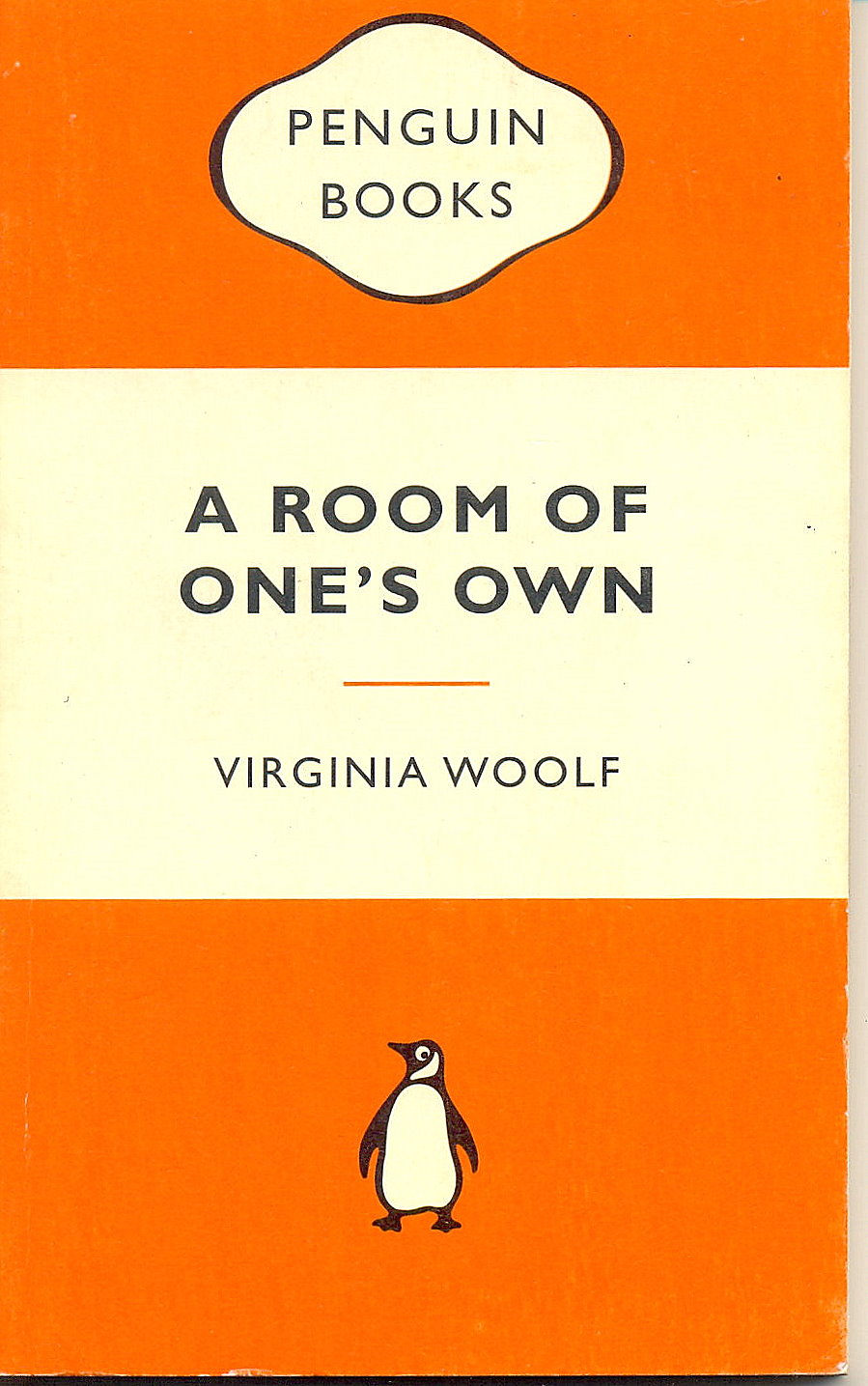
New old Penguins!


I am writing about this newly-reprinted 1928 book for a variety of reasons.

It reminds me very feelingly, but without rancour, how tough the lot of women has always been, until very recently, especially women who were ‘cursed’ with the divine spark (Virginia Woolf herself was led by recurrent and increasingly deep depression to suicide).

It also led me to ponder over how much has changed – and not changed – both in the west and in India – since Woolf delivered this lecture at Girton College, Oxford, in the very early days of higher education for women. I look forward to the day when womankind will finally produce the equivalent of Shakespeare (Woolf had expected the signs to become visible in a hundred years’ time!)

It told me how difficult really good ‘stream of consciousness’ writing is, and how sad it is that it has been ruined by countless incompetent emulators since Woolf’s time.

It was Woolf’s thesis that the most fundamental reason why women have never had the time and opportunity to write great literature was that they were bound in fetters of absolute poverty, and hence absolute dependence upon male-folk, and confinement to the domestic hearth, and lifelong grinding menial servitude. So every aspiring woman writer needs a room of her own and ‘five hundred pounds a year’ in order to spread her wings. Why, then, now that women’s material condition has vastly improved – even in India, at least among the urban educated liberal elite, whose numbers must certainly be greater than that of the whole of Britain today – do we still not find great creative (and independent-minded) folks among our women in good enough numbers? And if material poverty and sexual bondage are quite adequate explanations, how do we explain phenomena like Joan of Arc, Florence Nightingale and Marie Curie?... read the book.

Above all, I bought this little volume at Crosswords in Kolkata because it had the old, original Penguin look. My grandfather’s book-case was filled with books with the selfsame look, but then, as I grew up, they apparently went out of fashion, when Penguin started publishing books with covers as garish and commonplace as every other publisher was doing, in the belief, I suppose, that it was important to draw customers who were not really readers, who could not help judging (whatever their judgment was worth!) a book by its cover… it was an indescribably happy moment for me to find that they had started re-publishing books in the old, plain, familiar format again. Apparently sufficient numbers of readers with my kind of tastes still exist to justify it: a heartening thought. They are calling the series Penguin Red Classics. Only, in my grandpa’s day, the typical price of a book was one or two rupees (and it was often printed in terms of shillings): I bought this reprint for Rs. 199. But I am looking forward to buying many more.

P.S., June 02: Please do note, before dashing off a comment, that this post is not merely (or even mainly) about feminist issues but about good writing, and about genius, and about the (rather rare thing these days) love of books.

Sunday, May 23, 2010

About old posts, fathers, and other things

There was a post I put up more than three years ago titled How my world has changed, and I have got very few satisfactory (informative, thought-provoking…) comments on it yet, though it aimed to stimulate thinking in various different directions. Now that I have so many readers, I ask them once more: do please visit it, and reflect, and let me have the benefit of your reactions - after you have gone carefully through the comments already there.

As anyone who knows me (or at least has been following this blog closely for some time) will realize, fatherhood, and more broadly, parenting, is an issue that is perennially close to my heart. I also keep lamenting that of late so many parents – even if they know their real responsibilities, which is not a common thing in this country – delegate them by and large to servants, schools and tutors, imagining that spending money lavishly on their children is all they need to do. Worse still, countless children are growing up before my eyes thinking that that is indeed true, and the best parents are those who either scold all the time or indulge their every material whim – sometimes both together ( I have met a great many like that myself)!

Contrast this with the attitude of Barack Obama, whom I deeply admire as a father (look it up on the Net).  It so happens that this man is also the current President of the United States. Unlike so many fathers I know, he doesn’t claim he is too busy to take an active, sympathetic, helpful part in the growing up of his children; instead, he publicly laments that he has been an ‘imperfect’ father. And, writing from the White House, he also asserts that good parenting is fundamental to making a better society: we cannot hope for good results by foisting our failures as parents on either schools or the police or the church or the Net. Also, note that not once does he say that being a good parent means merely providing a comfortable and irresponsible childhood to his wards and ensuring that they ‘study hard’ in order to get a job. At the same time he (following in the breathtaking tradition supposedly set by Lincoln. As any sensible reader will understand, it doesn't matter one whit, of course, whether it was really Lincoln himself who wrote that letter) asserts that the task is infinitely more difficult, because the real goals are so infinitely harder to reach!

I should like some of my readers to assure me, after having read this post (and the links) very carefully, that their fathers did their job really well. A good father doesn't sermonize, snoop and boss; nor does he hold himself aloof: he is a friend who teaches by example - solving sums, telling stories, cleaning the toilet, playing games with his child. He doesn't molly-coddle, but he is always there when his child needs him. He has some genuine ideals (meaning those which he won't instantly desert the moment they get him into trouble). And he practises anything that he preaches, whether it is hard work or punctuality or not spreading malicious gossip. Remember also that they clearly said in the Aamir Khan starrer Rang de basanti that the least children can do is to find out how their fathers made their money before they decide whether to be proud or ashamed of such fathers! Leaking question papers for example, and awarding 'grace' marks for a consideration - is that okay as long as it pays for the childrens' frequent trips to the restaurant? Or prescribing quite unnecessary tests as a doctor, because the clinics pay commission on them? Or asking for 'cut money' in return for sanctioning building projects, as public engineers and administrators habitually do? Or simply sleeping at work, as so many dads do in this country? Why don't the kids go and look at them in the office sometimes?

Meanwhile, I am trying as a constant daily practice to ensure that I can respect and live up to such standards for my own daughter, because I have taught her already to be very critical of everybody, daddy included, and not to be ignorantly and easily proud…

Wednesday, May 19, 2010

Now this is something I like!


Sergey Brin, co-founder of Google Inc, went to work riding a bicycle, on a day when shareholders were meeting too, because it was Bike to work day at the company, which encourages green (eco-friendly) policies.

Brin, when I last checked, was worth $14 billion. As far as I know, he is a reasonably busy man. I should guess he ought to have some 'status' (the way Indians understand it) to maintain, too. None of these things stopped him from biking to his office. And hundreds of his humbler colleagues did the same   - some came from 50-plus miles away!

But of course, we Indians (however more or less 'successful' we are, from clerks to celebrities, and their children) are far too 'busy' and 'important' to do such silly things...

P.S.: I have put Sergey's blog on my blogroll.

Saturday, May 15, 2010

Just FYI

Seven hundred visits in seven days. Odd. The last time this happened was when I wrote I wish I had resigned sooner. Makes one think, doesn't it?

After a gap of years I have been experimenting with the 'look and feel' of this blog. I was getting a little tired of the same old (and rather bland-) template. Within two days one reader has sent in some positive feedback, one has complained, one has sounded doubtful. So I guess it is hard to please all. But I am not entirely pleased myself, so look forward to further changes soon.

I am glad some old boys are trying their hand at writing on their own blogs and telling me about it. I wish them good luck, and many happy hours of writing. Just don't give up too soon!

P.S., May 16: I am done tinkering with the blog template - for the time being. Please do let me know if and why you like it. As some kind readers have noted, they visit my blog far more for the sake of the contents than for the 'packaging', and I wouldn't have it any other way. But even looks need a makeover now and then, I'm sure most will agree... (by the way, you may have problems with reading this blog if you are still using an old browser like IE6: so the blogger administrator tells me. Try IE8 or Google Chrome, or a recent version of Mozilla Firefox).

I have 135 followers now, and the number keeps climbing, so I guess it should be close to the 150 mark by the time of the blog's fourth birthday in July. The 50,000-visits mark, of course, has already been crossed...

Friday, May 07, 2010

Not impressed...

I am now really tired of people trying to impress me.

Partly due to predisposition, and partly due to the way I grew up, I have always been very hard to impress.

I saw chairmen of ultra-large companies and union cabinet ministers in my father’s drawing room even when I was a child, because of the kind of politicking he then did. And I was brought up on stories of the kind of fabulous wealth my ancestors had piled up (before they threw it all away: that is another story) – someone paid Rs. 100,000 plus as income tax way back in the 1930s, when anyone earning a thousand a month was regarded as a very rich man, and his son got the latest Harley Davidson imported the week he saw it advertised in a British magazine when 99.9% of Indians didn’t even know what it was – and about others whose photos and exploits featured frequently on the front page of national newspapers, and yet others who were intellectual geniuses, like the doctor who could speak in nine languages, paint beautifully and play chess with grandmasters.

As a boy in school and college I myself got the kind of praise from teachers that is the stuff of dreams for most people, and even taught my own class at university on a professor’s request. My only boast about the Joint Entrance Examination is not that I got through with a decent rank (which, I have always maintained, is something that any half-wit crammer can do with a little bit of luck) but that I did it without going to any tutor, and while reading enormously ‘outside the syllabus’, including poetry in brajabuli and philosophy in French, and while tutoring many people almost my own age and helping out with my father’s fledgling business at a time of great financial distress and having a very intense love affair, and I don’t know of one other man of my generation in my own social set who has done that: if there is any, I’d love to meet him!

I drank the finest wines and spirits long before most of my classmates had heard about them (they are doing it now, and preening like children!) I was drafting editorials for a major newspaper and getting into the high security VVIP enclave of Government House (Writers’ Building) in Calcutta before I was 21, and had a company car to pick me up for work, and dozens of bylines in a year – and those were times when these things were not available to every newly-hired Tom, Dick and Harry, which is why I attracted the envious wrath of so many seniors that became a major stumbling block to my career. I grew sick of tycoons and big-shot ‘educationists’ sucking up to me in the hope that I could give them a few column inches in the paper.

Even when I came back to Durgapur and took a job with St. Xavier’s School, it was all most informal: I never wrote an application, never appeared for an official interview; the Jesuit fathers in charge simply invited me over, one because he knew what kind of student I had been, and the other because he was a regular reader of my newspaper columns (the one he had read most recently was my review of Dr. Amlan Dutta’s book on Gandhi). I chucked up jobs for the asking with employers like the Doon School and The Times of India and Oxford University Press only because they could not simultaneously pay me what I wanted and assure me the kind of quiet, free, organized lifestyle that I demanded. I have travelled abroad, and seen wonderful sights, and stayed at palaces and five-star hotels, and have always maintained that only crude and ignorant fools think these are things to show off: indeed, reading Hergé or Premendra Mitra or Isaac Asimov on distant lands they had never seen with their own eyes, I know for a fact that not one in ten thousand people who travel abroad these days can come anywhere close to entertaining and educating me as those giants of the mind could, for the simple reason that these people don’t have eyes to see with.

And now folks my age and twenty years junior are trying to impress me (when they are not spinning malicious yarns about me) about their bylines, and their trips abroad, and their piddling new cars and their ‘executive’ designations (I keep remembering the gag that in the US even in the 1970s a sweeper had become a ‘waste disposal executive’…)! The oldest so far was someone in his mid-70s on his recent business trip to China, the youngest was an early-20s idiot who told me this very morning that he was now in France. So big deal!

I am at peace with my station in life, and if I blame anybody at all for things that didn’t work out, I blame only my karma and no human being, and I am impressed only by a) simplicity and earnestness of character, and hardiness in facing misfortune (as I find far more commonly among rickshaw pullers and greengrocers, baul singers and maidservants than among ‘successful’ doctors and lawyers and executives, or b) men of really great wealth and power – and I expressly don’t mean the local thug or some engineer or doctor who makes just a few lakhs a month and is worth nothing more yet thinks the world of himself, and most of all c) when I see a combination of great and diverse knowledge with imagination, courage and charity. Alas, the number of people in the last category whom I have met in all the forty odd years of conscious life so far I can count on the fingers of one hand. But I refuse to lower my standards simply because most people don’t fit the bill.

Otherwise, I am fine with old boys who drop in with gifts (most important of which are chats about their work and about places they have been to without ego-hassles, chats which I enjoy). But please – this is meant for all readers regardless of age and sex and location and occupation – please don’t try so hard to impress me. You are only likely to burst a vein!

Afterthought, May 09: And then there were the titans, about all of whom it can be aptly said that generations to come will scarce believe that men such as they ever in flesh and blood walked the face of this earth. The greatest of all my sorrows is that I never had the inestimable privilege of prostrating myself before one such man. Today is Rabindra jayanti.

hey mahaguru, shorboshastrashaar, tirthoshreshtho, chiropother shongi - loho pronaam.

Monday, May 03, 2010

In praise of nerds

Tanmoy’s recent musing on nerds set me thinking, and presently it occurred to me that humanity can be safely divided into nerds, lunatics and automatons (let me know if I have missed some important category). The lunatics, of course, are a threat either to themselves or to society or both, whether they are of the trivial type like the housewife I mentioned in my last post on the other blog, or of the Ivan the Terrible/Adolf Hitler sort. The less we have to take notice of them the better.

Most of us are not born to become anything better than automatons, first at school and later on as workers and neighbours and family men… even those (a very small minority) who seem in their youth to be gifted with energy and imagination and a sense of personal direction by and large become that way by the time they have lived forty years on earth. Most of us have to, simply in order to cope with life as it is; the dullness of unavoidable routine not only eventually grinds out all sparks of the divine fire, but maybe that is the way it should be for ‘civilization’ to survive, seeing that most kinds of necessary work is of a menial, low-IQ, repetitive kind, whether you are pushing files or removing tumours or repairing boilers or balancing account books or selling insurance or managing a shop or cooking daily for the family. Thank God mankind produces far more of the Telemachus type than the Ulysses…

But, although defined in a rather sneering way, it is the nerds who keep not only the individual life but civilization as a whole from dying of stagnation. Every great invention or discovery was made (if not accidentally) by some unsocial nerd who stayed obsessed with finding out the why or how of something he found irresistibly curious, some problem he felt just had to be solved, no matter whether he could see any kind of immediate benefit from it or not – whether it was vast questions like why the apple always falls straight to the ground or finding out if something could shut bags and other things better than hooks, clasps or buttons could (I am thinking of the zip fastener), or figuring out what a strange inscription on a rock in a desert meant, or how to remove seeds from a juicy fruit. And where would sensitive and thinking people be without the likes of Homer and Shakespeare and Stevenson and Rowling, who were all nerds of the finest types? All mankind owes a debt to nerds that can never be repaid. Without them, we should still be swinging from the trees. And turning to the individual life, I admire no one more than a man who can say, at age 50, that he has started mastering sudoku or learning a new language, or watching a new genre of movies, or cultivating a new talent such as music or painting that he has just discovered inside himself. All of us who cannot do that are already dead, even if we might physically survive (and continue to pollute the earth, and irritate our families and neighbours with endless grumbling and preening) for some more decades still. Without a strong nerdy instinct, men and women become insufferably boring by the time they reach my age, as I can see very clearly among my own contemporaries: I’d hate to spend an evening with them instead of with their children, who, mercifully, are still not quite so brain-dead … though, alas, they are trying very hard to become like that, with Facebook and video games and Hannah Montana to help them!

P.S., May 05: Someone who probably wouldn't want himself named here (otherwise he could have sent in a comment directly) wrote that I might consider a fourth category of 'idiotic dreamers'. What do my regular readers think?